
Why Real-Time Data Matters for Construction Managers
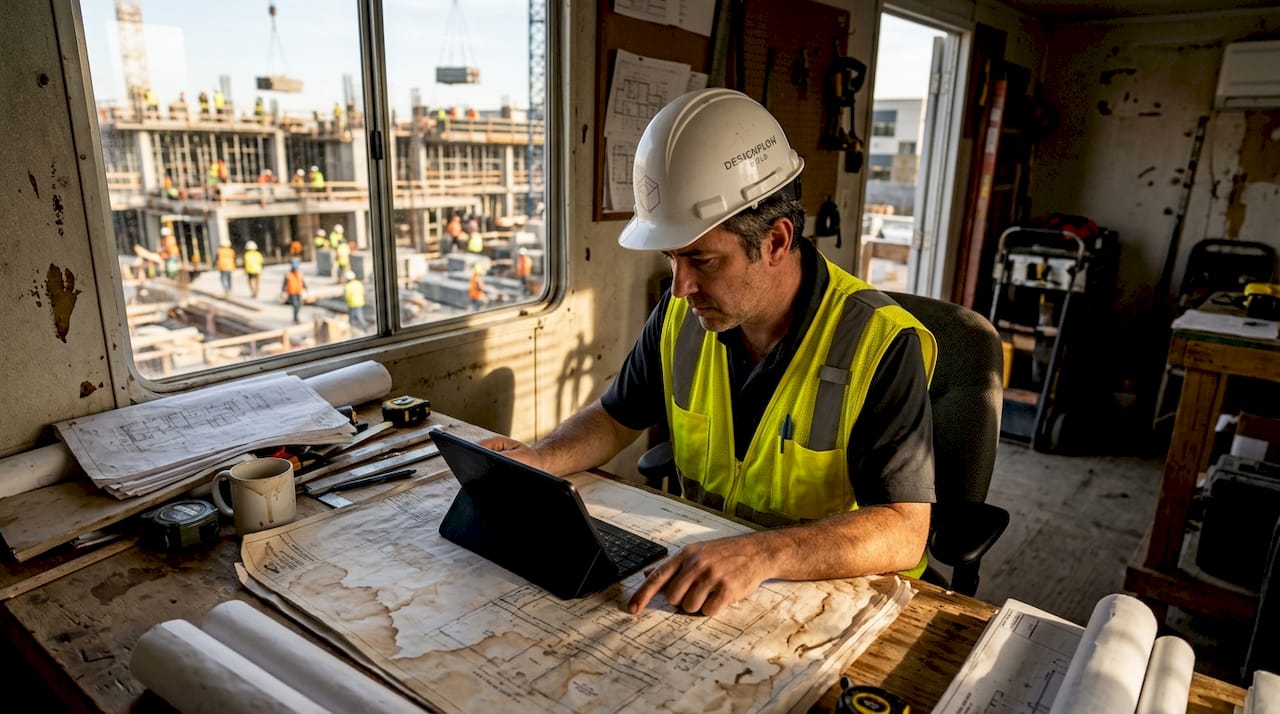
Construction managers who still rely on weekly reports are making decisions on information that is already wrong. Real-time data, meaning instantaneous access to accurate project information as events unfold on site, changes that equation entirely. When you can see schedule progress, labor costs, and quality issues the moment they happen, you stop reacting to problems and start preventing them. Frameworks like Earned Value Management (EVM) depend on current data to produce meaningful forecasts. Without it, EVM metrics are just historical noise.
Here is what real-time visibility delivers at a glance:
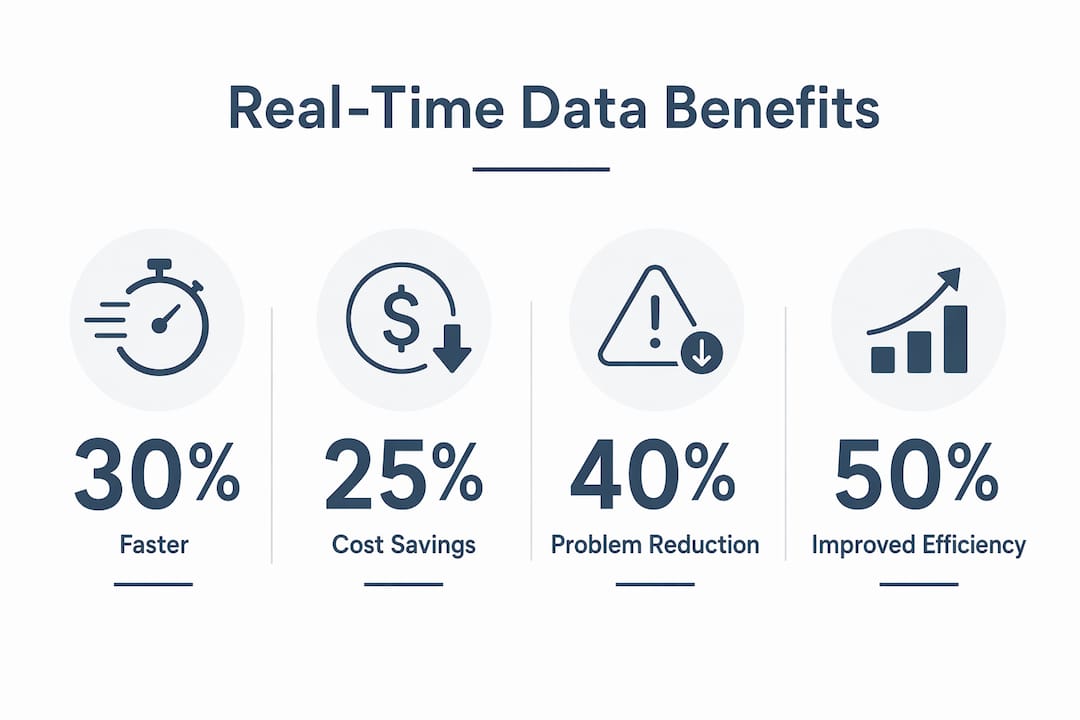
- Faster decisions: Issues surface significantly faster than traditional weekly reports
- Tighter budgets: Cost variances appear before they compound
- Better schedules: Delay alerts trigger before milestones slip
- Smarter resource use: Equipment and crew gaps show up in real time
- Stronger stakeholder trust: Clients see current status, not last week’s snapshot
Key benefits of real-time data in construction management
Real-time systems deliver continuous updates that reflect actual site conditions, not historical snapshots. That distinction drives every operational advantage below.
- Schedule accuracy: Automatic delay alerts let you reassign crews or adjust sequencing before a single-day slip becomes a three-week setback.
- Cost control: Up-to-date budget tracking covers purchase orders, labor costs, and change orders in one view, so financial overruns get caught early.
- Productivity: Monitoring equipment utilization and workforce output in real time lets you redistribute resources where they are actually needed.
- Risk mitigation: Instant alerts flag quality failures and safety incidents the moment they occur, stopping minor problems before they escalate.
- Stakeholder communication: Transparent dashboards give clients and investors current project status, which builds trust and reduces the back-and-forth of status calls.
Pro Tip: Set threshold-based alerts for budget variance and schedule deviation in your project management platform. A 5% cost overrun caught on day three is a conversation. Caught on day thirty, it is a crisis.
A mid-size commercial contractor used real-time cost dashboards to quickly catch a concrete subcontractor billing discrepancy soon after the invoice submission. The same issue, discovered at month-end reconciliation, would have required change order negotiations and potential litigation.

What challenges does real-time data actually solve?
Most construction delays do not start with a catastrophic event. They start with a gap in information that nobody noticed until it was too late.
- Outdated information: Weekly reports describe what happened, not what is happening. By the time a delay appears in a Monday morning report, the window to correct it has often closed.
- Resource misallocation: Without visibility into current site conditions, equipment sits idle on one part of a job while another crew waits for it across the site.
- Coordination failures: Subcontractors, general contractors, and owners operating from different data versions create conflicting schedules and duplicated work.
- Change order delays: Manual approval chains for scope changes can take days. Real-time workflows compress that to hours, keeping the project moving.
- Manual entry errors: Spreadsheets and paper logs introduce transcription mistakes that distort cost reports and schedule projections.
- Budget drift: Without immediate feedback on expenditures, cost overruns accumulate quietly until they become unmanageable.
The pattern is consistent across project types. Poor data flow is the root cause, and faster data is the fix.
How technology and frameworks make real-time data work

The infrastructure behind real-time construction data has matured considerably. Sensors on equipment, mobile apps used by field staff, and cloud-based management platforms now feed continuous updates into centralized dashboards, giving project managers a live picture of site conditions.
The research behind RealCONs used eight case studies to compare traditional manual data methods against real-time acquisition. The RealCONs framework outperformed the existing approach across every measured dimension, from early delay identification to decision-making speed.
| Technology or Framework | Primary Function | Key Benefit |
|---|---|---|
| IoT sensors and wearables | Continuous site monitoring | Instant safety and equipment alerts |
| Mobile field apps | On-site data capture by crews | Eliminates paper logs and transcription errors |
| Cloud project management platforms | Centralized data aggregation | Single source of truth for all stakeholders |
| EVM and ESM metrics | Schedule and cost performance analysis | Validated forecasting accuracy |
| RealCONs framework | Real-time data flow and analysis | Reduced decision-making delays |
| AI-native ERP platforms | Automated data processing and prediction | Faster risk identification and resource planning |
Integration with existing workflows matters as much as the technology itself. A platform that does not connect with your current scheduling or accounting tools creates a new data silo rather than eliminating old ones. Successful adoption also requires structured training. Teams that receive proper onboarding use real-time systems more consistently, which directly improves the quality of the data those systems produce.
Zone-based scheduling, a practice well established in service contractor operations, applies the same logic to construction crew dispatch: grouping work by location reduces travel time and increases productive hours per day. When that geographic data feeds into a real-time platform, dispatch decisions improve further.
How Designflow-build puts real-time data to work for you
Designflow-build was built specifically for construction managers who need live project intelligence without a complicated rollout. The platform consolidates project management, accounting, and field operations into one system, so you are never reconciling data between three separate tools at the end of the week.
- AI-driven project management predicts risks and flags resource conflicts before they affect the schedule
- Automated cost tracking covers labor, materials, and change orders in real time, with budget variance visible at a glance
- Field-to-office sync means crews update job status from mobile devices and project managers see it instantly
- Construction scheduling software with CPM and Monte Carlo analysis keeps forecasts grounded in current site data
- Designflow-build reports a 70% reduction in manual data entry, freeing your team to focus on decisions rather than paperwork
- Implementation within a few weeks with high user adoption, so the platform delivers value before the next project milestone

Designflow-build’s AI construction software gives you the real-time visibility that modern project management demands, without the months of setup that enterprise platforms typically require. If you are managing commercial projects where budget accuracy and schedule precision directly affect your margin, that speed of implementation matters.
Key Takeaways
Real-time data gives construction managers the speed and accuracy to prevent problems rather than just document them after the fact.
| Point | Details |
|---|---|
| Instant visibility prevents escalation | Real-time alerts surface delays and cost variances in hours, not days, enabling faster corrective action. |
| EVM and RealCONs validate the approach | Research confirms real-time frameworks outperform manual methods on forecasting accuracy and schedule adherence. |
| Manual data entry is a liability | Spreadsheets and paper logs introduce errors that distort budgets and schedules; automated capture eliminates them. |
| Integration and training drive adoption | Real-time platforms deliver full value only when connected to existing workflows and supported by structured onboarding. |
| AI-native ERP accelerates results | Designflow-build reports a 70% reduction in manual data entry and implementation in 2–4 weeks for construction teams. |