
Automation in MEP Labor Management: 2026 Guide

Automation in MEP labor management is defined as the use of AI tools, integrated ERP platforms, and digital fabrication workflows to replace manual scheduling, tracking, and estimating tasks across mechanical, electrical, and plumbing projects. The role of automation in MEP labor management has shifted from a nice-to-have feature to a core operational requirement. More than 50% of MEP contractors reported worsening labor availability in 2025, particularly in the Midwest and South. That structural shortage makes manual labor management unsustainable at scale. Platforms like Designflow-build, combined with BIM integration and AI takeoff tools, give MEP contractors the visibility and control they need to stay profitable on complex projects.
How does automation improve efficiency in MEP labor management?
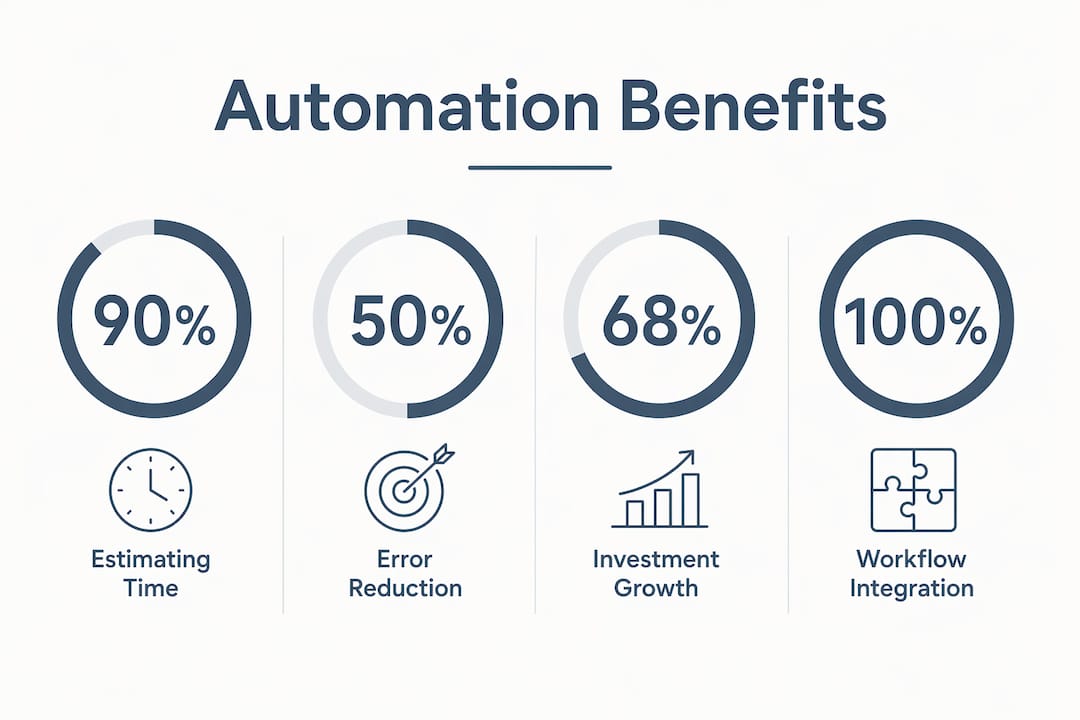
Automation cuts the time and error rate tied to manual estimating, scheduling, and field coordination. The gains are not incremental. AI-based takeoff tools reduce estimators’ manual workloads by up to 90%, compressing processes that once took days into a matter of hours. That speed directly improves bid accuracy and win rates on competitive MEP projects.
BIM integration with fabrication and scheduling platforms removes the manual handoff between design and production. When a BIM model feeds directly into shop scheduling, coordinators stop re-entering data and start managing exceptions instead. MEP contractors connecting fabrication workflows through integrated platforms reported $1.4 million in annual savings from reduced rework and optimized labor tracking. That figure reflects what happens when data flows continuously from design to field without manual interruption.

Real-time labor tracking is the third efficiency driver. Digital platforms give project managers live visibility into shop-to-field coordination, crew productivity, and material delivery timing. Without that visibility, field crews wait on materials and supervisors react to problems rather than preventing them.
Key efficiency gains from automating MEP labor workflows include:
- Estimating speed: AI takeoff tools cut quantity takeoff time from days to hours, freeing estimators for higher-value analysis.
- Scheduling accuracy: BIM-connected scheduling reduces conflicts between fabrication timelines and field installation windows.
- Labor tracking: Real-time dashboards replace end-of-day manual logs, giving supervisors same-day productivity data.
- Rework reduction: Integrated data from design through production eliminates the version mismatches that cause costly field corrections.
Pro Tip: Before purchasing any automation tool, map your current estimating and scheduling workflows on paper. Automation amplifies what already works and exposes what does not. Fix the process first, then apply the technology.
What are the primary benefits of automating MEP labor management?
Automation delivers measurable business results beyond simple time savings. MEP firms adopting a data-driven approach outperform peers by improving margins and schedule predictability through real-time production data. That performance gap widens as labor costs rise and project complexity increases.
The benefits stack across four business dimensions:
- Forecasting accuracy: Automated tracking of operational metrics gives project managers reliable data for billing cadence and cash flow projections. Firms that track shop metrics bill faster and dispute fewer change orders.
- Scheduling predictability: Data-driven workflows reduce the gap between planned and actual installation timelines. Predictable schedules mean fewer overtime costs and fewer penalty clauses triggered.
- Labor shortage mitigation: Prefabrication moves work from unpredictable field sites to controlled shop environments, improving labor availability, safety, and scheduling predictability. Shops can run with a smaller, more specialized crew than field installation requires.
- Risk and procurement control: Automated material tracking enables earlier procurement decisions. Firms that know their fabrication schedule three weeks out can lock in material pricing before market spikes.
“Automation is increasingly viewed as essential rather than optional to address structural labor shortages and scale output in the MEP industry.” — Why MEP Fabricators Are Doubling Down on Prefabrication Technology in 2026
The competitive advantage is real. Firms still running manual spreadsheets for labor tracking cannot match the bidding speed or margin control of contractors using integrated digital platforms. The gap between reactive and data-driven firms is growing, not shrinking.
What challenges do MEP contractors face when implementing automation?
Implementation is harder than most vendors admit. The biggest obstacle is not the technology itself. It is the fragmented, siloed workflows that most MEP firms have built over decades. Plugging a new platform into a broken process produces faster broken results.
Less than 30% of firms track VDC productivity or material logistics cycle time, and only 21% monitor on-time delivery rates. That gap in baseline measurement means most firms cannot even define what “improved” looks like before they buy automation software. You cannot manage what you do not measure.
Common implementation challenges include:
- Inconsistent design inputs: Automation tools produce inconsistent results when BIM models lack standardized components. Garbage in, garbage out applies directly to AI takeoff and shop scheduling tools.
- Low adoption in electrical fabrication: Electrical fabrication automation, including conduit bending and CNC machines, remains underutilized due to workflow variability. Adoption is growing but requires predictable BIM inputs to deliver consistent results.
- Process re-engineering requirements: Successful automation requires process re-engineering and integration of BIM data with production scheduling, not isolated tech adoption. Buying software without redesigning the workflow around it wastes the investment.
- Measuring theoretical versus actual labor: Firms that skip this step buy automation equipment and then cannot tell whether it improved output. Tracking both numbers before and after implementation is the only way to prove ROI.
Pro Tip: Standardize your design components and hire a dedicated prefab planner before investing in automation equipment. Those two steps prevent the inconsistent results that kill early adoption efforts.
What future trends will shape MEP labor automation?
The next phase of MEP labor automation moves beyond digitizing individual tasks. The direction is toward fully connected workflows where design, fabrication, and field operations share a single live data environment. Digital fabrication hubs are evolving into coordination centers that link design, procurement, production scheduling, and field delivery into one managed production environment. That shift changes the fabrication shop from a cost center into a strategic control point.
68% of MEP firms plan increased investment in tracking shop and operational metrics in 2026. That investment signals a broad industry move toward proactive, data-driven labor management rather than reactive problem-solving.
| Trend | Technology driver | Expected impact |
|---|---|---|
| BIM-connected shop scheduling | Integrated ERP and BIM platforms | Eliminates manual data re-entry between design and production |
| Real-time logistics tracking | IoT sensors and digital dashboards | Reduces field crew wait time and material waste |
| AI-driven labor forecasting | Machine learning on historical project data | Improves bid accuracy and margin control |
| Granular scrap and labor tracking | Automated shop floor sensors | Enables precise cost accounting and procurement timing |
| Fully connected design-to-field workflows | Cloud ERP with open API integrations | Closes the gap between planned and actual labor hours |
The firms that will lead in 2027 and beyond are building data continuity now. Automating the handshake between BIM models and shop floor production scheduling delivers more ROI than simply digitizing manual logs. The material flow from shop to field remains the least instrumented workflow in most MEP operations. That gap is also the biggest opportunity.
Key Takeaways
Automation in MEP labor management delivers the highest ROI when it connects BIM, fabrication scheduling, and field operations through a single integrated data workflow rather than replacing individual manual tasks in isolation.
| Point | Details |
|---|---|
| AI takeoff cuts estimating time | AI tools reduce manual estimating workloads by up to 90%, compressing days of work into hours. |
| Integrated platforms drive savings | MEP contractors using connected fabrication workflows reported $1.4 million in annual savings from reduced rework. |
| Measure before you automate | Less than 30% of firms track key operational metrics, making it impossible to prove automation ROI without a baseline. |
| Process re-engineering comes first | Automation fails without redesigning the underlying workflow to connect BIM, shop scheduling, and field delivery. |
| Prefabrication mitigates labor shortages | Moving work to controlled shop environments improves scheduling predictability and reduces dependence on scarce field labor. |
Why I think most MEP firms are automating in the wrong order
Most contractors buy the technology first and redesign the process second. That sequence almost always produces disappointing results. The firms I have seen get real ROI from automation started with one question: where does our data break down between design and the field? The answer is almost always the shop-to-field handoff. That is where materials go untracked, labor hours get estimated instead of measured, and field crews lose time waiting.
Automation is not primarily a labor-saving tactic. It is a risk management tool. When you connect BIM to fabrication scheduling to field delivery, you are not just saving hours. You are eliminating the information gaps that cause cost overruns, missed milestones, and margin erosion. The firms winning on complex MEP projects right now are not the ones with the most automation. They are the ones with the best data continuity.
My advice: start with the metrics you wish you had on your last project. Build the measurement capability first. Then buy the automation that feeds those metrics. That sequence produces sustainable gains instead of expensive software that nobody uses six months after go-live.
— Keith
How Designflow-build supports MEP labor automation
MEP contractors need more than a single-point tool. They need a platform that connects estimating, scheduling, and field operations without requiring a separate system for each function.

Designflow-build is an AI-native ERP platform built specifically for construction contractors. It combines AI takeoff, project scheduling, accounting, and field operations into one system, replacing disconnected tools like Excel and QuickBooks. Contractors using Designflow-build report a 70% reduction in manual data entry and monthly savings of up to $847K. Implementation takes 2–4 weeks with a 98% user adoption rate. If you are ready to connect your labor data from bid to closeout, explore MEP scheduling and AI tools or review Designflow-build pricing to find the right fit for your operation.
FAQ
What is the role of automation in MEP labor management?
Automation in MEP labor management replaces manual estimating, scheduling, and tracking tasks with AI tools and integrated digital platforms. The goal is real-time visibility into labor productivity, fabrication timelines, and field delivery from a single connected system.
How much can AI takeoff tools reduce estimating time?
AI-based takeoff tools reduce estimators’ manual workloads by up to 90%, cutting processes that previously took days down to hours. That speed improvement directly increases bidding capacity and accuracy.
What is the biggest challenge in implementing MEP labor automation?
The biggest challenge is process fragmentation. Most MEP firms run siloed workflows that automation tools cannot fix on their own. Successful implementation requires redesigning the workflow to connect BIM, shop scheduling, and field operations before deploying new technology.
Why is prefabrication important for MEP labor management?
Prefabrication moves work from unpredictable field sites to controlled shop environments, which improves scheduling predictability, labor availability, and safety. It also enables earlier procurement decisions that reduce material cost exposure.
How do I know if my firm is ready for MEP labor automation?
Start by checking whether you track VDC productivity, material logistics cycle time, and on-time delivery rates. If you do not measure those metrics today, build that baseline first. Automation produces measurable ROI only when you have the data to compare before and after performance.