
Real Time Budget Tracking for Construction Projects
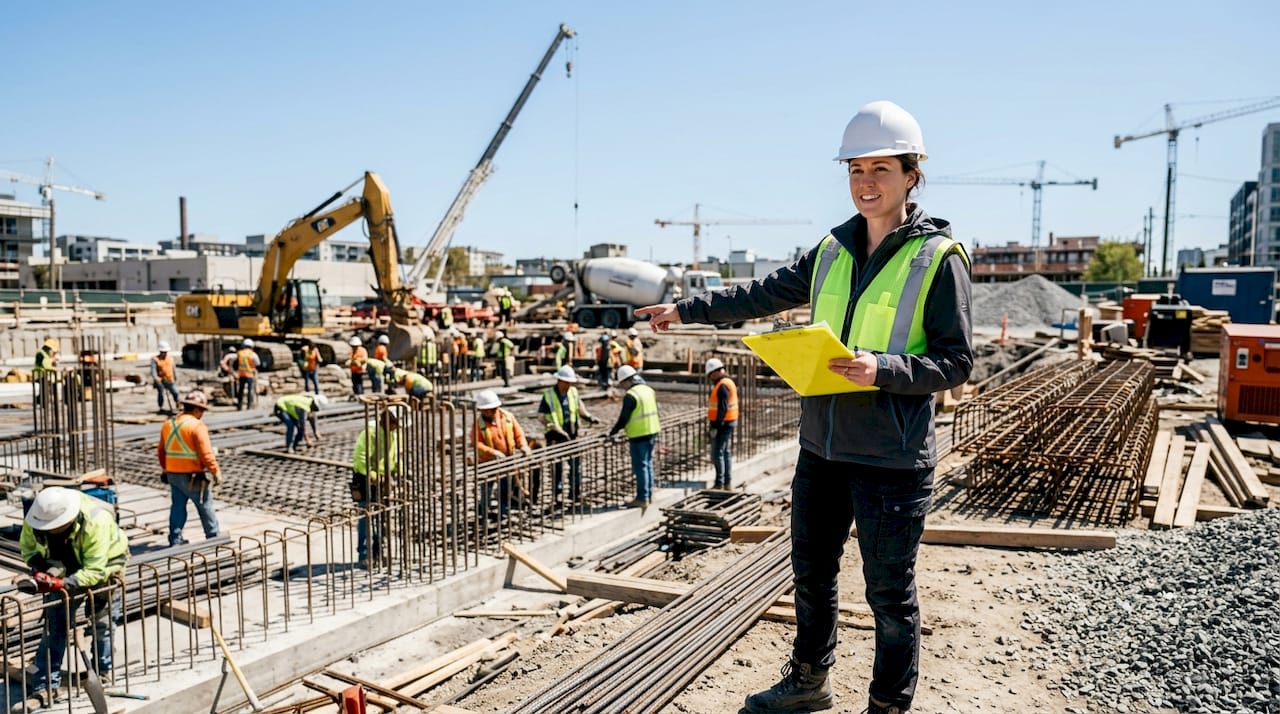
Real time budget tracking construction is the practice of continuously monitoring project costs against a financial baseline to catch overruns before they compound. Construction delays cost the industry $273 billion annually, and the majority of that loss is predictable with proper live monitoring. The industry term for this discipline is “construction cost control,” and it goes well beyond recording expenses. It requires integrating field data, schedule progress, and financial baselines into a single, continuously updated view. Projects that adopt this approach give project managers the information they need to act, not just report.
What does real time budget tracking in construction require?
Effective live budget monitoring starts with three financial baselines: a defined scope, an approved schedule, and a cost-coded budget. Without all three, you have no reference point to measure against, and any “tracking” you do is just expense logging. The cost breakdown structure assigns specific cost codes to labor, materials, equipment, and subcontractors, which makes variance detection possible at the line-item level.
The software layer matters just as much as the baseline. Construction teams need platforms that pull field data continuously, not just at month end. Key capabilities include:
- Real-time data integration: Labor hours, material deliveries, and equipment usage feed directly into the cost ledger without manual entry.
- Automatic variance alerts: Live budget alerts trigger the moment actual labor costs exceed the budgeted line, giving project managers immediate visibility.
- Visual progress tracking: Photo documentation and 360° capture tied to schedule milestones verify that reported progress reflects actual completed work.
- BIM and schedule linking: Connecting visual data to Building Information Modeling (BIM) models or Gantt charts creates verified billing records tied to real field conditions.
| Capability | Purpose |
|---|---|
| Cost-coded budget baseline | Enables line-item variance detection |
| Automated data capture | Eliminates manual entry delays |
| Live variance alerts | Triggers corrective action immediately |
| Visual progress verification | Validates billing against actual work |
| BIM or schedule integration | Links field data to project milestones |
Pro Tip: Set your cost codes before the first shovel hits the ground. Retrofitting a cost structure mid-project creates gaps in historical data that make variance analysis unreliable.
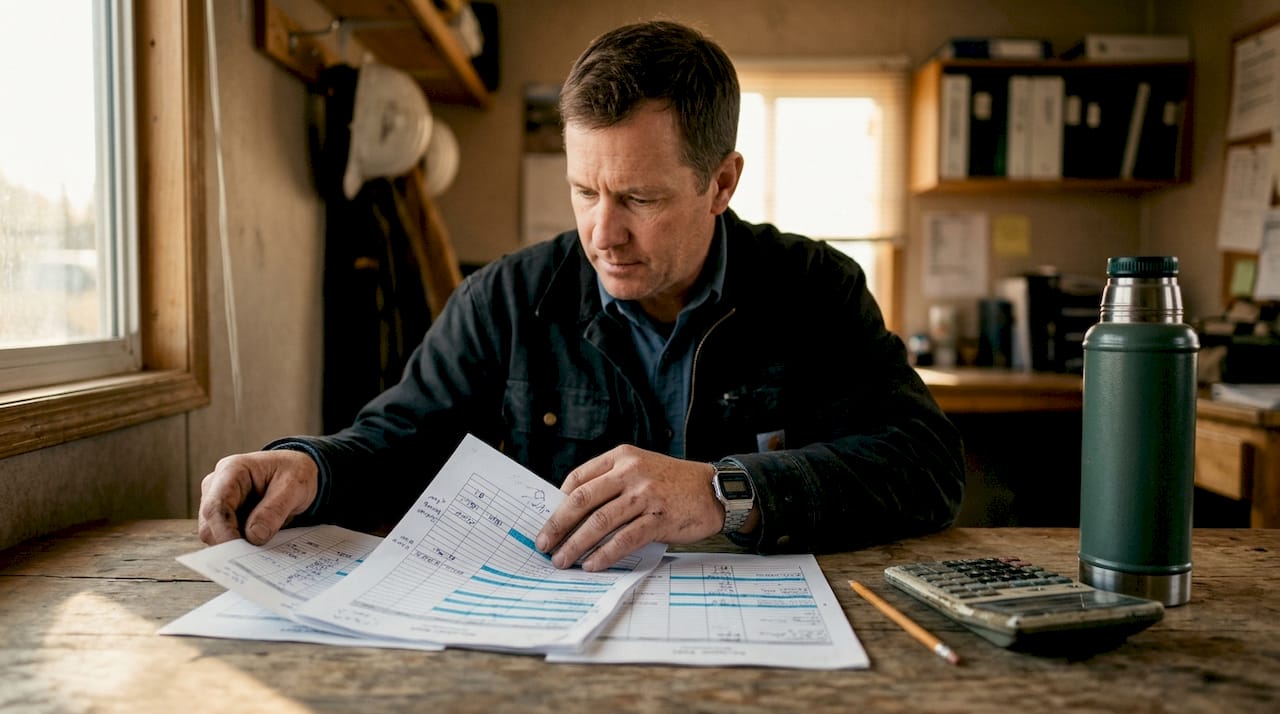
Construction expense tracking also benefits from understanding how financing affects cash flow timing. Knowing how construction loans work helps project managers align draw schedules with verified progress milestones, reducing payment disputes.
How do you implement real time budget tracking step by step?
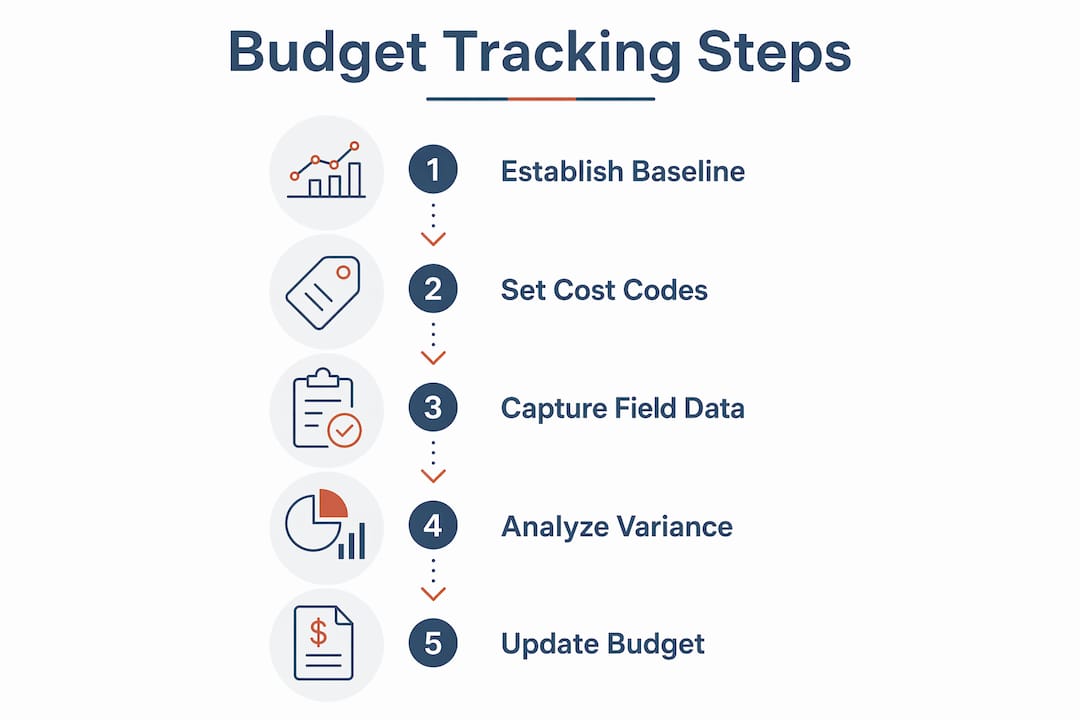
Implementation follows a clear sequence. Skipping steps early creates data gaps that surface as unexplained variances later.
- Establish your cost-coded budget. Break the total project budget into cost codes for each trade, phase, and cost type. This is the foundation every subsequent comparison depends on.
- Set the schedule baseline. Lock the approved project schedule before work begins. Every progress update will measure against this baseline, not against a revised or optimistic version.
- Configure your data capture workflow. Assign field supervisors responsibility for daily labor entry, material receipt logging, and equipment usage recording. Manual gaps here are the single most common cause of delayed variance detection.
- Integrate visual progress monitoring. AI-powered 360° capture can document 25,000 square feet in approximately 10 minutes, with image processing completing in about 15 minutes. That speed makes daily visual documentation practical, not aspirational.
- Link visual data to your schedule and BIM model. Verified visual records tied to specific schedule activities create an audit trail for billing and dispute resolution.
- Run weekly variance analysis. Compare actual costs and progress against baselines every week. Structured weekly reporting cuts schedule overruns by up to 25% and resolves issues significantly faster than monthly review cycles.
- Document every variance with a cause and corrective action. A variance entry without a cause and a response plan is just a number. It tells you something went wrong but not what to do about it.
Pro Tip: Never report percent complete as a raw figure. Always express it as variance against the baseline. A task that is 60% complete on day 40 of a 60-day schedule is not on track. It is 33% behind.
Project managers own the job cost report and are responsible for comparing actual performance against baselines and driving corrective action. That ownership must be explicit, not assumed. Assign it, document it, and hold it accountable in every project kickoff.
The change order process also feeds directly into live cost management. Every approved scope change must update the budget baseline immediately. Delayed baseline updates create phantom variances that erode trust in the tracking system.
How do you troubleshoot common budget tracking mistakes?
The most damaging mistakes in construction project budgeting are not technical. They are process failures that compound over time.
- Delayed data capture: Field data entered days after the fact creates a lag that makes variance alerts meaningless. By the time the system flags a problem, the cost has already grown. Daily entry is the minimum acceptable cadence.
- Raw percent-complete reporting: Percent-complete figures reported without baselines can mask schedule slippage until it is too late to recover. Always report earned value, not raw completion percentages.
- Variances without corrective action plans: Recording a variance and moving on is the most common failure mode in construction cost control. Every variance entry must include the identified cause, the projected cost impact, and the specific corrective steps assigned to a named person.
- Gaps between field and office data: When field supervisors and office accountants work from different data sets, the project manager cannot form an accurate picture. A single integrated platform eliminates this gap.
- Irregular reporting cadence: Monthly reviews catch problems after they have already inflated costs. Weekly structured documentation is the standard that data-driven projects use to identify deviations early.
“Most construction progress reports omit forward-looking variance analysis entirely. The result is reactive management: teams learn about cost overruns after the money is spent, not while there is still time to intervene. The fix is not more data. It is better questions asked on a shorter cycle.”
Understanding your project’s financial exposure also means accounting for soft costs. Reviewing builders risk soft costs coverage alongside your budget baseline helps you identify which cost categories carry the most financial risk if delays occur.
What are the benefits of visual verification and advanced software?
Integrating visual verification with budget tracking changes what “verified” means in construction billing. Progress reported by a field supervisor is an estimate. Progress documented by 360° imagery tied to a BIM model is evidence.
The practical benefits are significant:
- Dispute resolution: Visual records with timestamps and location data resolve payment disputes faster than written reports alone. Subcontractors and owners both have access to the same verified documentation.
- Early risk detection: When visual progress lags behind the schedule baseline, the system flags it before the cost impact appears in the ledger. This is the core advantage of integrating visual data with BIM and scheduling tools.
- Billing accuracy: Verified progress monitoring ties invoices to actual completed work, not to reported completion percentages. This reduces overbilling disputes and protects cash flow.
- Reduced manual effort: Designflow-build reports a 70% reduction in manual data entry for teams using its AI-native ERP platform. That reduction frees project managers to analyze data rather than collect it.
| Integration Type | Primary Benefit |
|---|---|
| Visual capture + BIM | Verified billing tied to actual work |
| Schedule + cost baseline | Earned value calculation in real time |
| AI variance alerts + field data | Early warning before costs escalate |
| Change order + budget update | Baseline accuracy maintained throughout |
Data-driven documentation catches schedule deviations earlier and reduces downstream cost impacts. The earlier a deviation is caught, the cheaper it is to correct. A one-week lag in detection can translate to weeks of compounding cost.
Key Takeaways
Real time budget tracking in construction requires integrated baselines, continuous field data capture, and forward-looking variance analysis to prevent cost overruns before they become unrecoverable.
| Point | Details |
|---|---|
| Baselines come first | Establish cost codes, schedule, and scope before any field work begins. |
| Weekly cadence cuts overruns | Structured weekly reporting reduces schedule overruns by up to 25%. |
| Variances need corrective plans | Every variance must include a cause, projected impact, and assigned corrective action. |
| Visual data verifies billing | 360° capture tied to BIM creates audit-ready records for payment validation. |
| Project managers own the data | Assign explicit ownership of job cost reports to a named project manager. |
Budget tracking is a discipline, not a feature
Here is what I have seen consistently across construction projects: teams invest in budget tracking software and then use it as a ledger. They record what happened. They do not use it to ask what is about to happen.
Forward-looking variance analysis is the differentiator. It requires you to identify the cause of every variance, project its future cost impact, and document the corrective action you are taking. That is three steps beyond recording a number. Most project managers stop at step one.
The projects that control costs are the ones where the project manager treats the weekly variance report as a decision document, not a compliance document. They ask: “If this trend continues for two more weeks, what does the final cost look like?” That question changes everything about how you respond.
I have also seen teams over-rely on percent-complete figures without ever checking them against the baseline schedule. A subcontractor who reports 70% complete sounds fine until you realize the schedule called for 85% complete at that date. That 15-point gap represents weeks of recovery work and real money. The raw number hides the problem. The baseline comparison reveals it.
The technology exists to make this easy. AI-powered platforms, visual capture tools, and integrated ERPs remove the manual burden. But the discipline of asking forward-looking questions has to come from the project manager. No software automates that judgment.
— Keith
Designflow-build brings real time cost control together
Designflow-build is built for construction teams that need live financial visibility without the complexity of stitching together separate tools. Its AI-native ERP combines project management, accounting, and field operations in one platform, so your cost data, schedule data, and field progress all live in the same system.
Teams using Designflow-build report a 70% reduction in manual data entry and monthly savings of up to $847K. Implementation takes 2–4 weeks with a 98% user adoption rate. You can explore the full range of AI construction software capabilities, or review the construction scheduling software tools that link schedule baselines directly to your live budget. Real cost control starts with the right foundation.
FAQ
What is real time budget tracking in construction?
Real time budget tracking in construction is the continuous comparison of actual project costs against a cost-coded baseline, with automatic alerts when variances occur. It gives project managers live financial visibility rather than end-of-month summaries.
How often should construction teams review budget variances?
Weekly structured variance reviews are the standard for effective cost control. Weekly reporting cadences reduce schedule overruns by up to 25% compared to monthly review cycles.
What is the difference between percent complete and earned value?
Percent complete is a raw estimate of work finished. Earned value measures that completion against the baseline schedule and budget, revealing whether the project is ahead or behind on both time and cost.
Why do most construction projects still experience cost overruns?
Most progress reports omit forward-looking variance analysis, leaving teams to react to overruns after the money is spent. Proactive tracking with cause identification and corrective action plans prevents this pattern.
How does visual data improve construction budget accuracy?
Visual progress documentation tied to BIM models and schedule milestones verifies that reported completion reflects actual field conditions. This prevents overbilling, supports dispute resolution, and creates an audit trail for every payment application.